
 Twitter
 Instagram
 LinkedIn
 Github
 Strava
 Facebook
 Seb vindt dit leuk.
Alles
Seb vindt dit leuk.Day 18: Micropub helper class
Today I extended my new Indieweb Toolkit with a Micropub helper class. This allows you to easily send Micropub requests from your PHP code. Here’s an example:
// Set URL and access token of the endpoint to use
micropub::setEndpoint('http://yoursite.com/micropub', 'xxx');

micropub::reply('http://example.com/a-nice-post', "Oh what a post!");
micropub::like('http://example.com/another-post');
micropub::rsvp('http://example.com/an-event', 'maybe');

$newURL = micropub::post([
  'name' => 'Custom posts are possible!',
  'content' => 'This is a story about (...)',
  'category' => ['story', 'custom'],
  'mp-slug' => 'custom-posts-are-possible',
  'mp-syndicate-to' => 'https://twitter.com/example',
]);

go($newURL);
Note that this only creates posts, and relies havily on the server you are making requests to. The mp-syndicate-to in the above example indicates that the remote server needs to post the entry to Twitter also, this helper doesn’t do a thing for that.
A drop-in Micropub endpoint is hard, because every site stores it’s data different, but I intend to extend this toolkit so that the different parts involved will be easier. (De facto making my own code more re-usable.)
Posted this post with use of todays code :D
als antwoord op
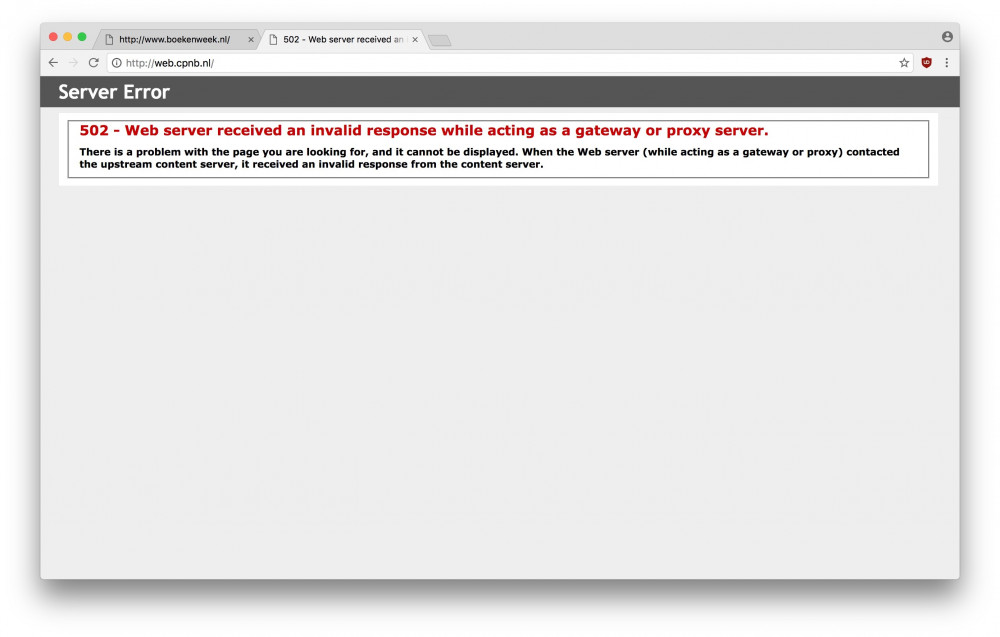
@raymonmens Oh, zo vindingrijk was ik niet, maar het @cpnb doet er wel verstandig aan die te wijzigen ja 😶
als antwoord op
Ah, het gaat gewoon allemaal een beetje mis bij het @cpnb...
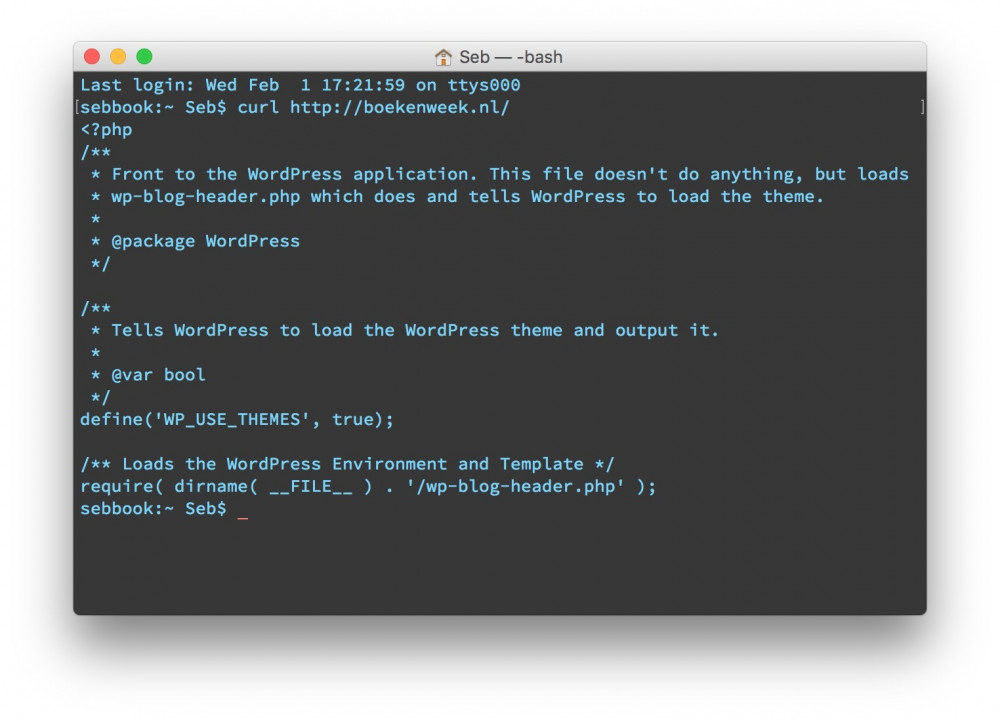
Wouw. #boekenweek
Day 17: okay, what now?
It’s only Day 17, and while there is allways stuff to do, I feel like I got to a point where everything more or less works like I think it should. To put it in another way: most of my itches have been rubbed.
At the same time, I feel like I have implemented a lot of stuff others have already build in some other form. Apart from my questionable new post type, I have not really build new things. And that’s no problem: nothing is entirely new, all things build on top of other things. My problem with it is that I keep building things other people build before me because they build it. I need to step back and think again: do I need this?
Another problem with the challenge is that I did a lot of ‘small’ things already, but keep seeing only big things on my list. This is both a problem (I keep postponing the big things) and the solution (this challenge forces me to break things down!).
There are a few general areas where I want to make progress that are just a bit to big:
-
Webmentions – I have them working, but I made some changes to the original Kirby plugin that might not be for everyone. I kind of want to start a new basic plugin, providing just sending and receiving Webmentions, possibly including a Panel Widget too (although I don’t use the panel myself). And then offer an extension to that plugin with Microformats parsing and display of comments.
-
Micropub – I wrote a Micropub plugin for Kirby, and it’s only the best out there because it’s the only one out there. I branched off the main branch to do some guild free drafting of the [update](https://www.w3.org/TR/micropub/#h-update) function. My own site uses the latest commit of that branch, the code is horrible and I have never merged it. The problem here is that there is quite a bit of technical debt in that plugin. It needs fixing anyway, although it does work for my site.
-
Importing old data – I’m just postponing on this one because it’s not very spectacular. But I think it’s okay to import some stuff every now and then and call it a day. I still have Strava, Hyves, my old Facebook, old blogposts from before april 2009 and three Vines. The problem here is that my current data is not really clean. I have tweets and blogposts that could be deduped, and the utf-8 conversion for some posts seems to be weird. Cleaning data doesn’t sound like a good thing within this challenge, so I’m postponing importing all together.
-
Private posts – This one might not be as big as the others in terms of work, but is does come in steps. I want to use IndieAuth, but also give Silo-friends a way of seeing posts, via Twitter OAuth and the like. Oh and I might want to write my own Authorization / Token Endpoint for Micropub, but that’s whole other point.
- Multilingual / multi topic – This was an itch for me, but this is one of the things I’ve pretty much fixed for the moment. I have multiple feeds of posts, tags, and thanks to indexing it goes fast as well. I might open different blogs on different domains, at some point, and use them like I use Twitter now: post on Seblog and push the post to those blogs. But that’s not a real itch for the moment. It can wait.
All in all there is enough to do, but none of the above things fit in a ‘today I fixed my X’. I need to start doing ‘today I fixed Y of my X’.
As a start of these things, I made a first version for an Indieweb Toolkit. It’s inspired by and makes use of the Kirby Toolkit. I want to put some basic Indieweb stuff in this thing, so I can re-use it for different projects. At this moment it only consists of a Webmention Endpoint discovery function and a wrapper for the php-mf2 Microformats Parser, but more to come!
Seb vindt een post van Trump Draws leuk. Seb heeft dit gebookmarkt. Seb heeft dit gebookmarkt. Seb heeft dit gebookmarkt.
Day 16: Backing up my Gmail
With the recent events in the USA, I’ve decided that I want to move away from having data on American servers as much as possible. The first thing I want to tackle in that area is my e-mail. Although I do have an address at seblog.nl, I still just redirect it to Gmail.
My computer is currently in the process of backing up my main Gmail. I documented how I do it on the Indieweb Wiki:
Gmvault seems to be very simple and straight forward. It's on the command line, so it's scary for some users, but it does a good job of describing what it does. I did the following on my Mac, and since I can't remember installing
pip, I think this works out of the box:
sudo pip install --upgrade pipsudo pip install gmvaultgmvault sync example@gmail.com- Gmvault prompts for OAuth, with a description. Press enter to open the browser, and you have to make sure you are logged in at that browser to the Gmail account.
- Do the OAuth in de browser and copy the key. Paste it in the Terminal
- Gmvault does things! I got 6351 mails out of an old account in 16m 14s. It creates a folder called 'gmvault-db' in your home folder, with (in /db/) folders for every month. In those folders are, per e-mail, an '[id].meta' and an '[id].eml.gz'. The .meta is a JSON with info from Gmail (labels/tags, subject) and the .eml.gz is a gzipped .eml, which is just the plain-text e-mail with all the headers.
Having the data is just one step. I will need to think about how I want to manage my e-mail in the future. For now I’m on Gmail still, but I am making plans.
To make today a bit more IndieWeb-relevant (e-mail is not web), I backed Micro.blog, because today is the last day of their Kickstarter campaign.
Although I really like that the project gives Indieweb a lot of attention, it felt wrong to only give to Micro.blog. So I also backed Aaron Parecki with the same amount, for his ongoing 100daysofindieweb. I use a lot of things he made or did first.
Seb heeft How to hack the upcoming Dutch elections van Sijmen Ruwhof gebookmarkt.als antwoord op
I really like XRays way of storing things (flat, knowing which properties will be string or array, and the rels list), and I wanted to use it with my reader. Having it as a library with #17 would be nice for that, but parsing the whole h-feed at once is also very handy.
So, allow me to brainstorm / share some h-feed stuff I learned with sebsel/lees :)
-
I agree: the feed does not have to have an author. It can be used to define the author of the posts, but the feed itself can be authorless. Example of a mixed h-feed is Twitter > HTML through Granary.
-
Different ways of presenting:
- have a
childrenproperty with an array[]of objects{}that are just what you get indatawhen you look at a h-entry - have a
childrenproperty with an array[]of urls, and put the h-entry objects inrefs
- have a
-
Some h-feeds have no
u-urlfor each h-entry. This makes it impossible to do 2. in those cases. But it might not be XRays task to fix that.
(Same fordt-published. A lot of WP sites havehentryclass with sometimes aarticle-nameclass, but dropped the rest of the Mf1. Again: might not be XRays task to fix that.) -
what to do with
h-eventandh-reviewwithin theh-feed? -> have to detect type for each child. -
when looking at a home page (i.e. aaronparecki.com), I get a card, which is great because that's the main object on that page. But when using XRay in a /reader, I want a feed. Would be nice to have a
type=feedparameter, to point XRay to the type of data you are looking for. - Once you go h-feed, should you go RSS/Atom?
Seb vindt een foto van Lisa Weeda leuk.Day 15: hacked my own site
Today I hacked my own site. I don't want to give details now, because it's late and it needs a proper write-up, but I will soon. It is fixed now. This post gets updated with a link to a more detailed article when it’s there.
When can one officially put ‘hacker’ in one’s Twitter bio? I think I’m close.
Update: I wrote the post! It's here.

Tussen het papier digitale dingen doen bij De Gids.
Seb vindt een foto van Roy Santiago leuk. Seb heeft Stop Using Arial & Helvetica van King Sidharth gebookmarkt. Seb heeft Lossless Web Navigation with Trails van Patryk Adas gebookmarkt.Day 14: XRay like-lookup
I’ve been posting likes to Seblog for a few weeks now. I like the likes, but they al looked like ‘Seb likes this’, so I was like: looks like I like to fix my likes.
Today I hooked up XRay to Seblog, so now my site can see things on URLs I link to. (I actually run a version on a ’secret’ URL, to keep things on my own server.) This way I can grab the name of the post I liked and show that, together with the author. If it has no name, but a photo, it says ‘Seb likes a photo’. It adds the author if it knows who it is. If it really doesn’t know anything about the page, it still defaults to ‘this’. I can fix those manual if I want.
XRay’s format consists of two parts: a data part, with information about the page it looked at, and a refs part, which is a list of URLs that are mentioned or embedded on the page. Retweets, for example, show the original tweet in the refs. I added a refs field to my pages, where I store the data part under the url of the page I mentioned and the refs part under the urls they came with.
An example, with Kirby Data and YAML:
Like-of: http://example.com/a-post
----
Refs:
"http://example.com/a-post":
name: A Post
author: Someone
repost-of: http://another-example.com/a-photo
"http://another-example.com/a-photo":
photo: http://another-example.com/a-photo/img.jpg
author: Someone ElseI can be more efficient with the moment I grab the data. For example: to send webmentions, my server already reaches out to all links in the post to find their Webmention Endpoint. If I parse the page then, I don’t need another call from XRay later on.
I also need to fiddle a bit with the things I want to display. But for now it’s okay: my server has the data for my likes. I even download pictures if a post has a photo property. I now not only own my likes, I also have my own archive of the things I like.
Seb vindt een foto van Daniël van der Meer leuk.